>

You can also do !

You can also help through active actions:


In your home

  • Get a home energy audit, which will let you know how much energy you consume and what changes can lead to an increase in the energy efficiency of your home.
  • Change light-bulbs to quality LED light-bulbs that can last 25 times longer, are more durable, and use at least 75 % less energy than other bulbs.
  • If your family lives in a house, consider installing solar panels on the roof. The solar energy  plunging price and the increasing variety of solar panels available on the market are shortening the payback time for the initial investment.
  • Clean or replace periodically the filters of the air conditioners you use. The dirty filter or heater will make the system  work harder and waste energy.
  • Use a programmable thermostat to maintain the desired optimal temperature in your home. In this way, you can lower the temperature when there is no one at home.
  • Wash clothes in cold water. Most of us still wash laundry in warm water, which costs more money and takes a toll on the environment. Approximately 76 % of the total energy use and greenhouse-gas emissions produced by a single load of laundry come from warming the water itself. Studies have shown that washing in cold water is just effective as using warm.
  • Don't rush to change your furniture. With small repairs and innovative solutions, you could live in a cozy and environmentally smart home.
  • Apply the 3R principle to your clothing. The fast fashion is not only wasteful, but the environmental costs of manufacturing and distributing new clothes is devastating.
  • Buy new appliances with the Energy Star label. These products are more efficient, meaning they can help lower your energy costs and reduce greenhouse gas emissions.
  • Nowadays, more and more people study or work from home.Design your workspace around natural light.
  • Unplug electronic devices when they aren't in use. Just because a device or appliance appears to be off doesn’t mean it’s not drawing power. About a quarter of all residential energy consumption is used on devices in idle power mode. Group appliances on power strips so you can turn them off at the same time, especially if you’re going on vacation.
  • Value and use every drop of water efficiently. Water management not only helps cities become more resilient in the faces of the extreme natural disasters, but also saves energy. Collecting and using rainwater for domestic purposes (such as watering the garden) helps reduce the burden on municipal wastewater systems and replenishes underground aquifers.
  • Increasing the energy efficiency of home means significantly reducing the energy needed for heating and cooling. Adding insulation, replacing old windows and the sealing of relays can reduce energy bills by more than 25 percent.
  • Follow the energy saving tips related to:
  • Recycle – Many waste streams contain significant amounts of valuable material that can be recovered and reused in production processes or other useful applications. This saves energy and resources, therefore  reducing the release of greenhouse gases into the atmosphere.

On your table

  • Reduce food waste. Whether it’s left on your plate or rotting in your fridge, wasted food is a big problem globally. Research by experts shows that annually, every European generates around 173 kg of food waste”, which have a significant contribution to greenhouse gas emissions.
  • Eat less ruminant meat. Raising cattle and sheep creates vast amounts of methane, a powerful greenhouse gas. Cutting out meat, or preferring to eat fish and chicken can seriously save carbon emissions.
  • Do not drink water served in a plastic bottle. More than 1000 years are needed for its biodegradation. Using a reusable glass bottle is a good alternative.
  • If your family lives in a house, plant your own vegetable and fruit garden. Nothing tastes better than vegetables and fruits grown in the backyard.
  • Search and buy agricultural production offered by local organic producers. Along with caring for the environment when growing it, the significant reduction in transport costs helps to reduce greenhouse gas emissions.
  • Start composting. Transforming food scraps, fallen leaves and cut grass into fresh, nutrient-rich soil gives home gardens a boost. Roughly 20 то 30 % of what we normally throw out can be composted.

Along your route

  • Start walking. Is there any single action that’s better for your mind, body and the Earth?
  • If  your company or school allows, work/study from home at least one day each week. Working a few days from home each month means one less commuter on the road contributing to greenhouse gases.
  • If you use a car to get around:
    • Make sure your tires are properly inflated. You can improve your gas mileage by up to 3 percent. Better gas mileage means a reduction in carbon-dioxide emissions.
    • Check your gas cap. A loose, cracked, or damaged gas cap allowс gas to escape from your tank as vapor.
    • Wash your car in a self-serve car wash. Washing your car in the driveway causes polluted water to run into sewers, and you’ll likely keep the hose running too long, and this leads to the consumption of 5 to 6 times more water than washing the car in a self-service car wash.
    • Turn off your engine if you’re stopped for more than one minute (unless you’re in traffic). Idling is bad for your car, uses fuel, and contributes to air pollution.
    • Replace your current car with an electric vehicle. That means you’re investing in the future.
  • Take public transport – that helps reduce traffic jam and carbon emissions.
  • Pick up trash while walking with your pet. Carry two small bags for the litter you find along the way – one for excrement and litter that should go to landfill, and one for waste that could be recycled.
  • Use the bicycle as a mean of transportation. According to research by scientists, shifting more urban trips to bicycling, and cutting car use accordingly, could reduce urban transportation CO2 emissions by 50 percent worldwide by 2050. That seems especially feasible when you consider that most city trips are no longer than 3-4 km.
  • Try commuting with an electric bike or scooter. Research shows that these means of transportation are 10 to 20 times more energy efficient than a car.

At school

If you are a student:

  • Do not forget that your school is your second home. Treat with care the desks, chairs and other objects in the classroom and corridors. These objects are a necessary part of school life, and no one finds it pleasant to spend time among dirty, scratched or broken furniture. Longer use of items helps save materials and energy.
  • Clean windows let in more daylight, reducing the need for artificial lighting and thus cutting both electricity consumption and greenhouse gas emissions.
  • In the heating season, you will need to air the classroom more often. This is best done by opening the windows wide for a few minutes, rather than leaving them ajar over a longer period, which results in significant heat loss, therefore – more greenhouse gases released into the atmosphere.
  • A classroom without flowers and plants can be very boring. Green leaves and bright colours help bring the natural world inside. Plants help to clean the air in the classroom. Don’t forget that indoor plants need more water in hot weather and when the heating is on as well as from fertilization and additional soil. The attitude and care for plants today will grow into responsibility and care for nature tomorrow.
  • Wood is used to produce textbooks, exercise books and many other school supplies. This takes a toll on forests. The reduction in forested area has a negative impact on the Earth's climate, which in turn leads to a reduction in the number of plant, animal and insect species, and their potential extinction. It also causes soil erosion, floods and the depletion of groundwater supplies. You can help to save trees and protect forests by reusing paper as often as possible, borrowing books from the library, writing on both sides of the paper, and reusing cardboard boxes and other paper products so as to reduce the need to produce new paper.
  • Your school can help to protect the environment by setting up containers for separate waste collection. Install clearly labelled containers for the separate collection of paper, plastic, glass and metal waste. Collect organic waste separately. A special container is also useful for hazardous waste such as batteries, fluorescent light tubes, leftover paints and other toxic substances or their packaging. Discuss with the school management how this initiative can best be implemented. Seek assistance from the local authority for organized removal of separately collected waste. So recycling will be your contribution to protecting the environment and mitigating climate change.
  • Make your school yard more attractive by planting plants and flowers. Take care  for them by regular watering and nutrition, and protection from pests. Compost fallen leaves and grass clippings. Try to create a habitat for birds and insects in the school garden. Use your knowledge and creativity to build perches, nesting boxes, feeders and other means of attracting them.

At the work place

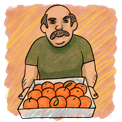
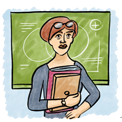
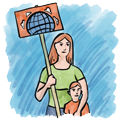
There are main professions related to people's daily needs, such as:

that can make significant contribution to the protection of the environment and combat the climate change.

In your neighborhood / settlement

  • Determine with your neighbors the parking spaces in the immediate vicinity of your homes and strictly follow the parking rules without affecting lawns and sidewalks.
  • Fight against the "perpetually parked" cars that block areas and contribute to traffic jams in the busy part of the settlement. Advise their owners to turn to specialized companies for recycling old cars.
  • Plant trees in the spaces designated as green spaces. Shade, serenity, sustainability – trees add so much to the urban landscape and ask so little.
  • Shop locally – that supports local businesses, provides community jobs, and reduces transportation costs and carbon emissions.
  • Turn one of the streets into a pedestrian zone. Let it become a haven for pedestrians and a place for organizing public events.
  • Familiarize with the world's experience by learning about good practices for protecting the environment and dealing with climate change: https://www.c40.org/good-practice-guides/
  • Organize an outdoor information point to distribute climate change literature and information.
  • Get involved in actions to clean the green areas, the river bed or the surroundings of ъоур settlement. The comfort of your home will be even more pleasant if the environment is welcoming.
  • Advocate with architects, planners and city government for better building codes and energy efficiency of the buildings where you live, study or work. Buildings are responsible for a significant part of the energy used – this makes them key to solving the climate crisis.
  • Keep  contacts with the local authorities. Be interested in what climate adaptation programs are foreseen d in the plans of the local government. Feel free to offer suggestions based on your knowledge and awareness of environmental and climate change issues. Push for the gradual transition of the settlement to the use of clean energy based on renewable energy sources.

With your community

         This will enable you to participate reasonedly and competently in discussions and decision-making related to the fight to tackle climate change.

  • Discuss with family, as well as with friends and colleagues, taking concrete measures in your community that can contribute to overcoming the consequences of climate change.
  • Support:
    •  journalists’ publications reporting on the environmental, social and economic aspects of climate change. Good journalism makes us better citizens and helps us learn more about issues in their diversity.
    • initiatives of business companies related to sustainable development and the combat climate change.
    • experts, scientists and public figures who are running for certain positions in public and political life, if their platforms clearly advocate proposals for effective management and protection of the environment, as well as measures to mitigate and/or adapt to climate change.
  • Get involved in civil movements and organizations dedicated to nature conservation and sustainable development.
  • Actively participate in events related to environmental protection and climate change.

Educational scenario

Measures to tackle climate change

“We are the first generation to feel the sting of climate change, and we are the last generation that can do something about it. ”

Jay Inslee, an American politician and economist


The two most commonly used approaches to tackle global warming and climate change are:

  • Mitigating climate change by taking action to reduce or prevent the further release of greenhouse gases into the atmosphere. Such actions may include: improving energy efficiency, using energy-efficient appliances, reducing waste generation; transition to more sustainable models of production and consumption, etc. – Learn more,
  • Adaptation to climate changes that have already occurred. That includes diverse measures, targeting different components of the environment, human health and economic activities – Learn more.

The worrying consequences of the climate change on Earth have forced the international community to take actions for addressing the climate change effects.


Nutrition that helps tackle climate change


Preliminary discussion:

Share with students some of the scientific research and recommendations related to the food we eat every day and its impact on climate:

  • Raising cattle and sheep creates huge amounts of methane, which is a powerful greenhouse gas. Less frequent inclusion of this meat in the diet, preferable consumption of fish and chicken or vegetarian food can seriously reduce the release of carbon emissions into the atmosphere.
  • The production of plastic products is based on the use of non-renewable energy sources and is accompanied by significant energy consumption. A plastic water bottle, for example, is usually used once, then thrown as a garbage, and it takes over 1,000 years to decompose it in natural conditions. That's why using a glass water bottle instead of a plastic one protects nature from pollution and at the same time helps to overcome climate change.
  • Growing and consuming your own fruits and vegetables and/or buying local organic agricultural production reduces transport costs and therefore the greenhouse gas emissions into the atmosphere.
  • Composting (the transformation of food scraps, fallen leaves and grass clippings into fresh, nutrient-rich soil), in addition to being beneficial for nourishing the domestic garden, helps reduce household organic waste by about 20 to 30 percent.
  • Reducing the amount of food waste thrown into the garbage has a significant contribution to the reduction of greenhouse gas emissions. Research by experts shows that each European citizen generates around 173 kg of food waste annually.

In class:

Present the video "The diet that helps fight climate change", using, if necessary, the automatic translation into Bulgarian.

Discuss the facts presented by the video in the context of the information provided by the preliminary discussion.

The diet that helps fight climate change


Show the video "10 Ways to Slow Climate Change" to the class. Discuss the 10 proposals presented in order to tackle climate change. At the end of the discussion, ask the class to answer the question: Which proposals have already been implemented in the students' families and which can find application in the future...

Present the video "Climate of Europe in 2050" to the class, using, if necessary, the automatic translation into Bulgarian.

Discuss:

  • How many degrees would the average temperature rise by, if no measures were taken (4oC)?
  • Which regions is the most unbearable heat expected in for the people living there (the regions of the Iberian, Apennine and Balkan peninsulas)?
  • Which part of Europe will see a decrease in precipitation and more intense drying of the soil (Southern Europe)?
  • How will the climate change affect heat waves passing through the European continent (increasing their intensity and duration)?
  • Which regions of Europe will climate change be most felt in during the winter period and what does this change mean (Northeastern Europe, less frost and snow cover)?
  • Which topographical part are climate changes occurring in faster and what are they manifested in (in the mountains, less snow, more precipitation and floods, shorter time for winter sports)?
  • How will the precipitation pattern in Europe change (more precipitation in winter in the north and less precipitation in summer in the south)?
  • What changes are expected in the urban climate (the northern cities climate will resemble the current climate of the southern cities in 2050)?

Explain that the disturbing consequences of Earth climate change have forced the international community to take action to address the impacts of climate change such as:

Encourage students to learn more about these measures described in the Klimadapt portal if you think their age is appropriate for working with such information on their own.

Explain to the class that climate change mitigation refers to actions for the reduction and prevention of the further release of greenhouse gases into the atmosphere. Actions can be taken at individual, local or international level. Too often, however, some individuals and societies prefer someone else to do the job to mitigate the effects of climate change, as long as they themselves can benefit from that. So tackling climate change is a great example of the need for effective collective actions at all levels

Discuss specific measures and give examples of mitigation such as:

  • improving energy efficiency at home;
  • improving transport energy efficiency;
  • efficient appliances usage;
  • green energy utilization;
  • forests, soil and ocean protection.

Support students work by directing them to specific topics in the Klimadapt portal (Energy, Transport, Forests, Agriculture, Ocean) where more details could be found.

Study and discuss with students the information presented in Worksheet Consumer Society and Climate Change. Search the Internet for additional information about consumer attitudes in Bulgaria and Europe.

Discuss:

  • Is it possible to force limit the excessive consumption of goods and services, or is it more effective to use educational methods and information campaigns?
  • How would you comment on the North American Cree Indians proverb: "Only when the last tree has died and the last river has been poisoned and the last fish has been caught will we realize that we can't eat money."

Ask the students when they have felt happier: when they receive or when they grant a gift to a loved one? In which case have they been excited longer and stronger?

Present to the students the following situation: In a week, a person, very dear to them, will celebrate his/her birthday. What gift would they choose? Ask the students to think of and come up with suggestions for an interesting gift that is not material or at least not expensive.

Organize the class work into small groups so that each student can share their experience and suggestion. Give them 10-15 minutes to share their ideas, with the group choosing only one gift suggestion at the end. Make a presentation of the gifts chosen from each group and write them on the board. Discuss whether a valuable gift can be non-material and not necessarily expensive (for example, a new experience, a surprise, a handmade gift – drawing, collage or other). Is it possible for such a gift to be unique, valuable and unforgettable? Ask the class to choose one or two of the most interesting suggestions.

Remind them that modern people possess a huge amount of things that they do not use, where raw materials and energy are invested, which make a burden on the environment and the climate.

Professions that can help


Preliminary preparation:

Divide the class into 5 groups (or choose 5 volunteers) who will get acquainted with the information related to the professions:

You could increase the number of groups (volunteers) if you add some more of the professions listed below:

In class:

Organize a 7-10 minute presentation of each of the chosen professions. Have the groups/volunteers highlight their impact on the environment and climate, as well as the ways in which this impact can be mitigated or neutralized. Encourage students to be ingenious, creative and artistic in presenting the listed professions.


Climate change adaptation measures


Explain to the students that:

  • Human population has adapted to the natural environment throughout history by developing practices, cultures and livelihoods suited to local conditions. With the current rapid pace of climate change such as extreme temperatures, catastrophic rainfall and flooding, hurricane storms, etc., it is possible that societies will face challenges that they have not encountered and are not prepared for.
  • Adaptation means anticipating the adverse effects of climate change and taking appropriate actions to prevent or minimise the damage they can cause, or taking advantage of the opportunities that may arise.
  • Adaptation measures can be both large-scale (such as infrastructural changes in roads, coastal zones) and conducted at individual level or within a single household.

Brainstorm sequentially generating and recording ideas for adaptive measures related to:

  • Water (Rainwater collection; water storage and preservation techniques; water re-use; desalination; economical water use and irrigation efficiency);
  • Biodiversity (Creation of dedicated land corridors to help species migrate);
  • Agriculture (Adjustment of planting dates and crop varieties; crop relocation in other regions; development of drought-sustainable crops; improved land management, such as erosion control and soil protection by tree-planting);
  • Human health (Heat protection action plans development; provision of emergency medical services; improved climate-sensitive disease surveillance and control; provision of clean water and improved sanitation);
  • Tourism (Diversification of tourist attractions; relocation of ski tracks to higher altitudes and glaciers; artificial snow usage);
  • Transport (Prioritisation and reorganisation of transport types and usage of alternative eco transport; introduction of new standards and planning for roads, rail and other infrastructure to cope with warming and floods);
  • Energy – Strengthening of overhead transmission and distribution infrastructure; underground cabling for utilities; improvement of energy efficiency; use of renewable sources; reduced dependence on single sources of energy.
  • Construction (Adaptation of building regulations to future climate conditions and extreme weather events);
  • Ethics (Promotion of lifestyles tailored to increased sustainability and resilience to climate change).

The measures in parentheses are intended to support students work during brainstorming and are by no means exhaustive of the possibilities for other ideas.


"To have" or "To be"


Write on the board (or quote to the class) Kevin Kruse statement (former Deputy Attorney General of the United States): "Life isn’t about getting and having, it’s about giving and being.

Encourage students to share how they understand and appreciate this concept, giving examples related to their everyday lives.

Explain that according to the German psychoanalyst and philosopher Erich Fromm (1900-1980), the attitude of "having" orients a person toward material possessions and power and is linked to greed, envy, and aggression, while the attitude of "being" is directed toward the pleasure of shared experience and creative activity and is motivated by justice and humanism.

Make the transition from these philosophical generalizations to the realities of environmental protection and the threat of climate change. Remind students of the different levels of responsibility and action on climate change:

Explain that only united and focused efforts at all levels can produce the desired results to combat climate change. These results are extremely dependent on the actions of each one of us.

Challenge the students to decide for themselves which position they would choose regarding the climate: To have and receive (goods, money) or To give and be (an active and useful inhabitant of planet Earth).


Score: | 10
Question: | 10


To celebrate the World Climate Change Day (15 May), organize a campaign including:

  • cleaning, afforestation and other eco activities;
  • conducting a video week with the presentation of films dedicated to climate change and ways to limit it. Invite viewers of different ages and parents;
  • creation of information wall (or periodic electronic edition) with information materials on environmental and climate issues.

Make a comprehensive assessment of the environmental condition of the school in terms of energy efficiency and plan its gradual improvement. Look for partners such as institutions, companies and non-governmental organizations to implement activities to improve energy efficiency.


The world will not be destroyed by those who do evil, but by those who watch them without doing anything. Albert Einstein
Weather Greenhouse Consequences Measures Library
<
Video clips
Handouts
Teaching aids
×

About the portal

The informational and educational portal Klimadapt is intended for the dissemination of information, training of students, teachers and the general public, as well as for the organization of civil projects and campaigns dedicated to overcoming and adapting to climate change. Its creation took place within the project Changing with Climate, which is implemented by 10 partner organizations with the support of the Environmental Protection and Climate Change Program through the Financial Mechanism of the European Economic Area /2014-2021/.

The Klimadapt portal includes a variety of informational and didactic materials (texts, videos, lesson plans, dilemmas, model stories and fairy tales, worksheets, experiments, tests, games, instructions on how to organize actions, etc.) that provide opportunities for implementation of a learning process and/or organising a variety of activities related to mitigation or adaptation to the occuring climate changes.


Portal Development

Information texts and structure, concept of the portal: Kliment Mindjov

Educational scenarios: Kliment Mindjov, Tatiana Miteva

Portal design and PDF files: Sylvia Magyar

Illustrations and graphics: Laszlo Falvay

Video adaptation: Ivan Kozhuharov

Translation from/into English: Irina Dobriyanova, Kliment Mindjov

Editing in Bulgarian: Galina Spassova

Programming: Daniel Mirea

Management of the "Changing with Climate" project: Mariana Bancheva, Violeta Nikolova

The portal uses photos from the iStock and Unsplash platforms, as well as “pro bono” provided materials from the photo and video library of the Regional Environmental Center for Central and Eastern Europe (REC).


Acknowledgements

The development of the Klimadapt informational and educational portal was made possible through the goodwill and cooperation of a wide range of specialists and organisations.

We express our heartfelt gratitude to Prof. Dennis Meadows and his collaborators for the copyright for the Bulgarian language version of "The Climate Change Playbook", which includes 22 interactive games.

Nikolay Petkov researched and prepared information related to good Bulgarian and foreign practices in dealing with climate change. We thank him.

In the virtual library of the portal, informational and educational materials of various nature of various organizations, created years ago, but facing increasingly difficulty to find on the Internet, are included. In this regard, our thanks go to:

The informative and educational texts in the portal reflect facts and data from various international and Bulgarian sources: European Commission, European Environment Agency, World Health Organization, United States National Aeronautics and Space Administration (NASA); United States Environmental Protection Agency, Intergovernmental Panel on Climate Change (IPCC), World Bank, World Resources Institute,  Ministry of Environment and Water of the Republic of Bulgaria, Regional Environmental Center for Central and Eastern Europe, publications in BBC, The Guardian and other periodicals. The creators of the portal are responsible for the content and the way the information is presented and visualized.

Finally, but not least, we would like to express our sincerest gratitude to our sponsors from the Financial Mechanism of the European Economic Area (EEA FM) and the program operator at the Ministry of Environment and Water of the Republic of Bulgaria. Thank you!

×

How to use